Showing posts with label Homebrew. Show all posts

Sunday, June 16, 2019

A Knave's Guide to Eberron: The Mournlands

Cyre, the Purple Jewel in the crown of Galifar, sits in ruin. The dead too numerous to be counted, seared away in supernatural cataclysm which still taints the land like an emanating radiation, like noxious fumes wafting out of a bloated corpse. This is the Mournland, for it is a place of sorrow and for remembrance of a dark event that destroyed a culture without explanation.


The Mournlands bifurcate Khorvaire, its borders defined by a powerful miasma which churns like a dust storm, like a warning not to enter. The mists are said to drive men to madness by way of unceasing malaise, they carry the cries and psychic fears of those who died during the Day of Mourning upon them. In the thickest of the fog, their shadows wage in endless war as silhouettes.

Bodies litter the Mournlands in various states of decay, the rampant arcane energy toys with the natural decomposition process. Fields of charnel atrocities twitch and seizure, choked cries by consciousnesses trapped in dead frames echo out on the winds. Some sites are locked in time, bodies fallen but unblemished by the ravages of time or vermin. 

The fields of the Mournland, of Cyre’s former rolling hills and beautiful horizons, are overgrown. The grains which once created the most artisanal goods, crumble at the most errant touch into a gritty silt. Vineyards grow their crops, unattended, the fruits resemble fetal forms; it is likely pareidolia but only the most desperate would risk this unkindness of imagery. 

The waters of Cyre have receded, turned crimson or reverted into pestilent bogs. Death strandings of all manner of creatures can be found upon the forsaken shores, twitching in half-life, translucent in the skin, bones shown. Flies drone endlessly, though they never seem to be present. Mechanical cables, larger than any sane thing, shudder upon the beach and trail back down beneath the waters in the distance. Steel Krakens, some say, but even a kraken should must obey the rules of nature. It should not be this large.

The sky is always cloudy, overcast, ready to rain down ash, greasy waters, or other pestilences upon the fog-choked land. Travelling the Mournlands without proper shelter is just as risky as travelling it without weapons at the ready. The tattered husks of civilization within are just as treacherous as the open wilderness. 

Cabin Boy is an underrated film and speaks to my upbringing.

Cyre did not deserve this fate, it was a land of beauty and plenty. King Jarot’s daughter was meant to inherit the crown, not this legacy of horror. Cyre has no true ruler anymore, though Prince Oargev ir’Wynarn can claim a right to rule, he has no land to call his own. He hardly has a people. Cyran refugees litter the surrounding nations, untrusted for their former military’s actions in the last war, for the glory they once had, and for the doom that some believe follows them. They are as a people, from a culture of high art and fashion, primarily now destitute and hopeless. Cyran artifacts are worth a lovely sum, ensuring a flooded market that forces them into further indignity, and the prevalence of scavengers who will plunder their former homeland; risking life and limb for their own petty gains.

The Warforged may find their purpose here, as the Lord of Blades seeks to make this ravaged wreck heap into a homeland for the betterment and propagation of his race. His supremacist politics, vicious rhetoric, and ruthless efficiency reveal him to be the very worst of Cyre and the Mournlands, married into the frame of a hulking mechanical monstrosity. For every cultural milestone he seeks to claim, he looks upon the rest of the world with the same ambition which denied Cyre it’s crown. The mantle of a becoming god calls to him more than any petty throne, and his followers must straddle the line between violent zealots and peaceable wanderers to those who encounter them in this blasted place. 

Considerations for the Mournlands
The Mournlands are if you took a WWI no-man’s-land, turned it into Hiroshima and Nagasaki after the bombs dropped, and then allowed it to be the Chernobyl zone of exclusion. It is a place of tragedy, and therein lies the horror. It is fitting in a pulp perspective, but the tone should feel very "deep behind enemy lines" wherein the enemy is existence.

The Mournlands is not scary because it is filled with monsters, it is scary because it is wasted potential, it is a place where everything a civilization should strive for--maybe even deserve, has been inverted in a terrible way. The most beautiful and cherished realm of Galifar is now a heap of filth to suffer only the molestations of bonepickers, vultures, wayward cultists, and the misguided. Might makes right here, but this is not a place where goblin warlords wage for dominance in that philosophy; this is a place where might makes right because nobody is coming here to save you, nobody cares you’re here, you have no motives here but the ulterior; you cannot save this land, you will lose yourself here.

Characters who travel the Mournlands must contend with the mist, which will slowly infect their dreams and drive them into a depressive state where self-harm, suicide, or homocide seem to make sense as a means of coping with their utterly insiginificant place in a world where such atrocities can occur. Warforged are immune to this, in theory; those found in the Mournlands are considered to be some of the worst of their own kind---but it’d be too easy to blame that upon the mists.

Monsters in the Mournland
The creatures who dwell here represent the folly of man, of overgrasped ambition and nature’s inability to allow the wicked toil inflicted upon the earth to prevent animal life from attempting to retake the civilized world. 


Mourner
HD 3, AD 13, ATT 2d6 (Ghastly Claws), Morale: - , Speed: 50 ft (Flight). No. Appearing: Solitary or a Haunt (2-5).

A swirling torrent from the mists, humanoid at a glance, like a man stretched and bent, broken and tattered into merely wind. It howls and echoes in profound sorrow, clutching ghastly claws of razor wind as if holding its hand might allow you to pull it out of this endless torment.
  • Hopeless - Mourners, upon dealing maximum damage with their Ghastly Claws, inflict a hopelessness in their victim. If the victim falls prone or would otherwise die from this attack, they must make a Constitution Saving Throw. On a failed throw they inhale deeply the mists and begin suffering psychic trauma, haunted by visions of a life not their own and a diseased attraction to the items in this vision. If a hopeless character were to say, encounter the living spouse of a Mourner, they would feel compelled to make them their own--acting in anger and desperation. Psychic surgery, therapy, or alcohol can numb this hopelessness into a more...internalized problem.
What’s it doing? [d6]
1. Shrieking and searching for something, scanning the environment with frenzied intensity.
2. Manifested in almost physical form, weeping and holding itself. The mists claim it when approached.
3. Banging recklessly upon the ruins of a structure, attempting entry, looking back towards the mists that spawned it as though it wishes to outrun the calamity.
4. Crying upon the winds, in baleful calls it asks where everyone is, why it’s so alone, why it cannot find them all.
5. It has its claws upon a looter, who as you watch, slits their own throat as they cry out how they “just want this to stop feeling so painful.” 
6. Screaming up at the sky, cursing the Sovereign Host and beckoning any dark power which will let it see its family again.


Shroud of Death & Despair (Living Finger of Death)
HD 9, AD 19, ATT 3d8 (Slam) or Finger of Death, Morale: - , Speed: 20 ft (Throb). No. Appearing: Solitary or a Hateful Hand (5).

A gelatinous pulsating pillar of blackest night, throbbing and sluggishly pulling itself through the land. The world around turns to ash, flesh grows tight across the bone, necrosis overtakes living tissue. When it aims its nucleus upon a being, they age away into ash.
  • Finger of Death - A Shroud of Death & Despair must focus upon a creature for two turns as its nucleus is pushed from the bottom of its ooze-form to the very top. The nucleus, white, almost skull-shaped yet liquid, affixes itself on a victim once it is pushed to the top. If a victim has not taken cover, the Shroud releases a horrible beam of white energy which deals 7d8 damage, aging the victim until they are nothing but bone dust and ash. 
What’s it doing? [d6]
1. Pulsating in a rhythmic pattern, as if communicating to something in code.
2. Leaning against a structure, slumped, as if resting; the structure is slowly aging itself to dust against it.
3. Submerging part of its base in a deep puddle of filthy water.
4. Seeking out organic matter to obliterate.
5. Remaining perfectly still, almost dried, as if inert. Rouses to life if approached by organic matter.
6. Spreading flagellum out, as if seeking to divide itself into two shrouds.


Steel Kraken
HD 8, AD 18, ATT 2d10+8 (Crush), Morale: - , Speed: 50 ft (Swim) or 10 ft (Crawl). No. Appearing: Solitary.

Steel cables, articulated by cumbersome, drag this leviathan of Cannith constructed folly at a slow pace. It is too large to engage with conventional weaponry. Its eyes shimmer a gemstone red, and its mouth is a spiralling razor pit of blades. 
  • Colossal - A steel kraken is too large to be harmed by normal weaponry, taking damage only inflicted by war magic, large impediments (such as tumbling boulders or vicious shrapnel filled pits), or by siege weapons. Its reach extends hundreds of feet, but its crushing attacks are slow. A steel kraken would make an amazing dungeon.

What’s it doing? [d6]
1. Attempting to drag the whole of its immense sky-scraper sized frame on to dry land.
2. Spraying a vicious red miasma into the air above itself. Thunder crackles as a result.
3. Staggering and grinding, as if an internal mechanism is broken.
4. In-taking loose sand and silt from the shoreline where a death standing has taken place.
5. Emerging from the depths of the water in the distance, its eyes locked firmly upon any interlopers with hateful intent.
6. Wrapping its brutal cable-strong tendrils around a foreign ship, crushing the hull as though it were as flimsy as tin.

===
Having run my first session of A Knave's Guide to Eberron on 6/15/19, I had a damn good time. The session took place on its way into the Mournlands and the party who were utterly unfit for the job, did a great job botching it, getting maimed in the process, and are now likely going to find themselves hunted by both House Cannith and the Karrnathi military for the knowledge they shouldn't have about a planar experiment to create a more perfect (i.e. less sapient) warforged; which the party believes may have been a catalyst for the Day of Mourning. That's their theory anyway.

I look forward to doing more of these, I'm enjoying writing about this from an attempted pulp perspective, and the Mournlands should thematically really hammer home man's folly and ambitions in everything it is about. At least in my opinion.

Hope y'all like and can make use of any of this. I'd write more, but alas, grad school and factory work in the morrow.

- Brian

Monday, March 25, 2019

The Monsoon Ghats - 1. The Faith of Colors & Early Notes

The Lord of the Universe ignited the twin suns of soul and sacrament, illuminating the endless tapestry of night. All His manifold dreams coalesced into all that exists, in all possible forms and in the illusory stardust between those forms. Joy and emotion clouded the supreme truth of the Lord of the Universe, and in the light of the twin suns be birthed the world illusory. 

Granting His raw blissful emotion a place in the mist and smoke, the water and sky, and for a time He watched. He watched His virtues and vices, His ideals and emotions, and all the sins He thought Himself too majestic to possess. 

And then He heard a Voice, which granted Him purpose; for it was not of His creation. It spurred something new, His curiosity...

>*<

The Monsoon Ghats are the southern coastal mountains of the Land of Triumph, where the Lord of the Universe found joy and sorrow and was wounded by mortal man in a war betwixt the illusory nature of existence and the supreme truth of the cosmos. 

It is a borderland of the lush, with the ocean side of the ghats locking deep black soils and rich sinewy trees. Civilization holds itself here, bound by doctrine of the Daeva and the Asura; The Faith of Colors, honored still despite the warring nature of these celestial tribes. The common folk cling to moralities that might allow them to change their stars, often in lock-step with atrocities committed at the behest of their masters towards those who will not bow as deeply. The Faith of Colors was a thing of splendor before the celestial tribes suffered their schism, now the vestiges of once was engage in petty skirmishes for supplication. 

Many in the Ghats hold themselves to but four colors, forsaking all others. They festoon their banners and houses with that they were born to, hoping with power and time to ascend to the next.

Many are weaker for sake of these petty ambitions. 

A dog's age since a brahmin was born of deepest indigo and void-knowing. Most are conformed to mortal colors and mortal aspiration;, dominance, power, wealth and joy. Illusory items that weigh heavily upon their karma and might sink them completely to serpent-shriven underworlds if not for deeds done in ages past. 

The Faith of Colors is not diminished in its majesty, though it is fractured and as such tested. Those who once served it have been forsaken in man's pursuit of supremacy and comforts. 

The Raksha demand fealty for their service in the War of Wounding. Few are willing to pay, fewer still willing to admit the atrocities forced upon them. Some were concepts, illusory sins bound with purpose to slay perfidious river naga; others were of mortal tribes bent to the will of cruel words and made monsterful to fill the hosts of the supreme truth. They are a horror to behold, blackened like ash without an ember to stoke their soul. The Faith broke them, and now they play the villain for hope of promises to be honored and old shames apologized for. 

The Vanara are of equal pain, forced now to live in a world without blissful ignorance and the frivolity of a war-time's simple morality. Virtue forced into the framework of ignorant animal can make good deeds bestial and make a simple atavist contemplate too darkly the nature of their soul. These are not the heroes of ancient deeds, their temples and statues are forlorn. Most think of them as thieves and fools, undeserving of respect within the hierarchy. The Faith has left them to the wayside, they're characters for children's stories now.

The Bangla, the bear-people, have never held the Faith of Colors in any high regard, they wish only to fight and appease their Mountain at the roof of the world. Those within the Ghats are sell-swords and monster hunters, looking to drink deep the honey of the earth before they return to the stone from which they were born. Upon the fur of their chest is a pattern still, a rank held in the ancient armies, they feel contempt for those who do not recognize the mark. They claim to hear the dreams of the Lord of the Universe echoing out from the Mountain, though man does not entertain this blasphemy.

The Naga-Malla are perhaps all that remain truly devout to the Faith of Colors, and they view humanity as holding it in poor regard. The elephants existed since the first thrumming sound emitted when the Lord of the Universe ignited the twin suns. They know truth and revile in the illusory world which grows stronger with each passing age. They feel great doom, each cycle reborn with less of the world being as it should be. They would remake the Faith of Colors, but too quickly would man tarnish it in their petty grasp for power.

>*<

At a Glance
The Monsoon Ghats is a setting which makes use of a mash-up of B/X & Knave rulings, and it is constructed for sake of being a toolbox setting book akin to Yoon-Suin. Attention and research is paid for sake of representing religious and ethnic groups in a fantastical world without (hopefully) dishonoring their real world counterparts. Symbols and influences are meant to be present, but no group should be a 1-for-1 translation. I've been told to aim for that which I find interesting by my readers, and as such the Monsoon Ghats are designed for tiers of play which will eventually see characters involved more in warfare and politics than mere dungeon-delving. This is not a game of superheroic divinely powered characters, it is by design intended to come across as a vaguely pre-Vedic India which is dealing with other religions and socio-political factors that would not have cropped up in said era.

Notes in Broad Strokes
In meta-contextual notes; the Faith of Colors is the stand-in for Hinduism within the broader setting. It is, for the bulk of those who reside within the Monsoon Ghats, the truth of creation. It is henotheistic for the most part, though the Lord of the Universe's exact status is open to debate. He may be all that is, and thus beyond reaching; he may be only remnants and vestiges in the form of the Asura and Daeva, his sins and virtues and all of humanity is but a continued test to see if illusory desires or supreme truths will have a true victor.

I realize much of what is here doesn't present greater context to the religion, and that's...noted. I have more written but I'd rather not just lore-dump, especially for homebrew. I can bang it out to a good four pages altogether explaining the current socio-political-religious situation of the world, but I'd rather get further work done before that. Things change. My two sensitivity reader pals, one Hindu one Muslim, are both of the mind that I'm doing all right; but I'm a religious parasite who has never found that perfect fit while at the same time appreciating all the imagery. So it will be a situation. I also don't want the Faith of Colors to come across as Hinduism with the numbers filed off, because that's boring and offensive and I'll make note of that further down the page for those still reading. 

The Lord of the Universe, is for sake of my own interests, based more on the Jagannath by way of Vaishnavite origin. Though for my purposes he is re-purposed as an entity of flaws and virtues; who upon finding something beyond his own creation (perhaps this alone is a deception, an illusion, a falsehood) allowed himself to descend to the world he'd created and be subsequently maimed and wounded by aspects of himself he dared not accept. He is, for my purposes, much like a young lover who in his own inability to accept and work on his weaknesses, is undone by them. 

This is not a setting of Good and Evil, Law and Chaos; it is one of Virtue and Illusion by which ones karma is judged. Those who adhere to positive actions in their life will face many tests and will, hopefully, rise to the occasion stronger for it. Those who dwell in the illusory world of temporary mortal joys will be given chance to deny such things, and many may yet fail. Karma, as a statistic, is  on a 1-100 rating with thresholds. It is primarily rolled when you wish for someone to believe in you or to appeal to their better nature. It is used by Holy-men to reveal the wicked and weak of moral fiber. It has no stronger power than that and in translation between other faiths beyond the Faith of Colors, things are often lost. 

I like personally, the idea of demi-humanity within the setting being leftovers from a powerful ancient conflict. The Vanara are without guidance or grand heroism to participate in, as such they are without purpose in these "modern" times. The Raksha are either illusory spirits forced into a truism, a "Cruel-but-Certain" or "Spiteful-but-Honest" type of situation; or they are made from human beings who in seeking their own grasp on the world were converted against their will. I always found it interesting how certain groups in Hinduism were demonized while still being very much real-world ethnic group stand-ins. I like the Raksha as being strange spiritual ogre-esque horrors who by all accounts deserve praise and thanks but are not given any; I think this can lead to a tragic narrative and purpose for adventuring.

The Bangla are based upon Jambavan, and in theory they are meant to represent those who religion has left behind, the larger than life heroes whose own traditional way is discarded in favor of what is palatable and easier as a societal control mechanism. I also like the idea of blue sun bear/sloth bear monster hunters, that's cool. They mirror well against the Naga-Malla, whose traditional view on the Faith of Colors is that humanity has perverted it and things are only getting worse; they're literal Opener of Ways and Remover of Obstacles type elephant demi-gods. 

I like the idea of a starting party consisting of various humans from differing varna, who function in society on different levels but in the eyes of any demi-humanity character are all the same. I personally view the "caste" system as a control mechanism, especially in our modern day where its subtle strings are things I have to deal with as a fully Americanized/Colonized brown person. That all being said, I do of course have massive respect for Hinduism as a religious grouping. It is beautiful and intriguing. 

Which leads to my next note.

No Kali in Fantasylands
Not a fan of putting real world religions 100% into fantasy worlds, it just doesn't do me right. While it is already presumptuous to state a religion to be an absolute truth in fantasy, it is even more harmful to do so while misrepresenting it egregiously. There is no Kali or Hanuman or Ganesh in the Monsoon Ghats, what there is would be Daeva or Asura; the benevolent and baleful faces of the shining supreme beings who represent those sorts of powers. 

Hopefully by Friday, though I make no promises, I'll have my proper Daeva/Asura Generator for the Monsoon Ghats up. It is made for determining lesser house/personal deities, larger deities, and the stories associated with them. Each figure has multiple stories depending on their domains (they are tied to the Holy-man class, after all), as well as notes for items like should one become a decapitated god, or should one become an amalgamated deity. 

The Monsoon Ghats is meant to have more to it than just Hinduism. Jainism (under the framework auspices of the specific belief that it existed prior to Hinduism), Sikhism, Buddhism, Islam, and certain more interesting forms of Shaktism will see parallels; none of which are intended to be 1-for-1s, and all of which may have some degree of commentary upon them while at the same attempting to respect and pay kindness to their beauty. Which is to say that if I am to go into this specific set of randomizations for not!Hinduism, the same sort of care and consideration for randomizers would also need to be applicable to other faiths in the game. 

Current play-testing sees a Holy-woman of the Bel Shahih (the pseudo-Islam of the setting), and that's going well, or at least is capturing the spirit of what I'm working towards so sayeth one of my readers. I would say it is going well to the point that even if I end up being an imperfect creator for this project, I will hopefully at least provide material enough to not misrepresent and to also allow for someone to use said material as tools to do a much better job in the future. 

Monday, March 18, 2019

Dolmenwood: Ratling (Race-as-Class)


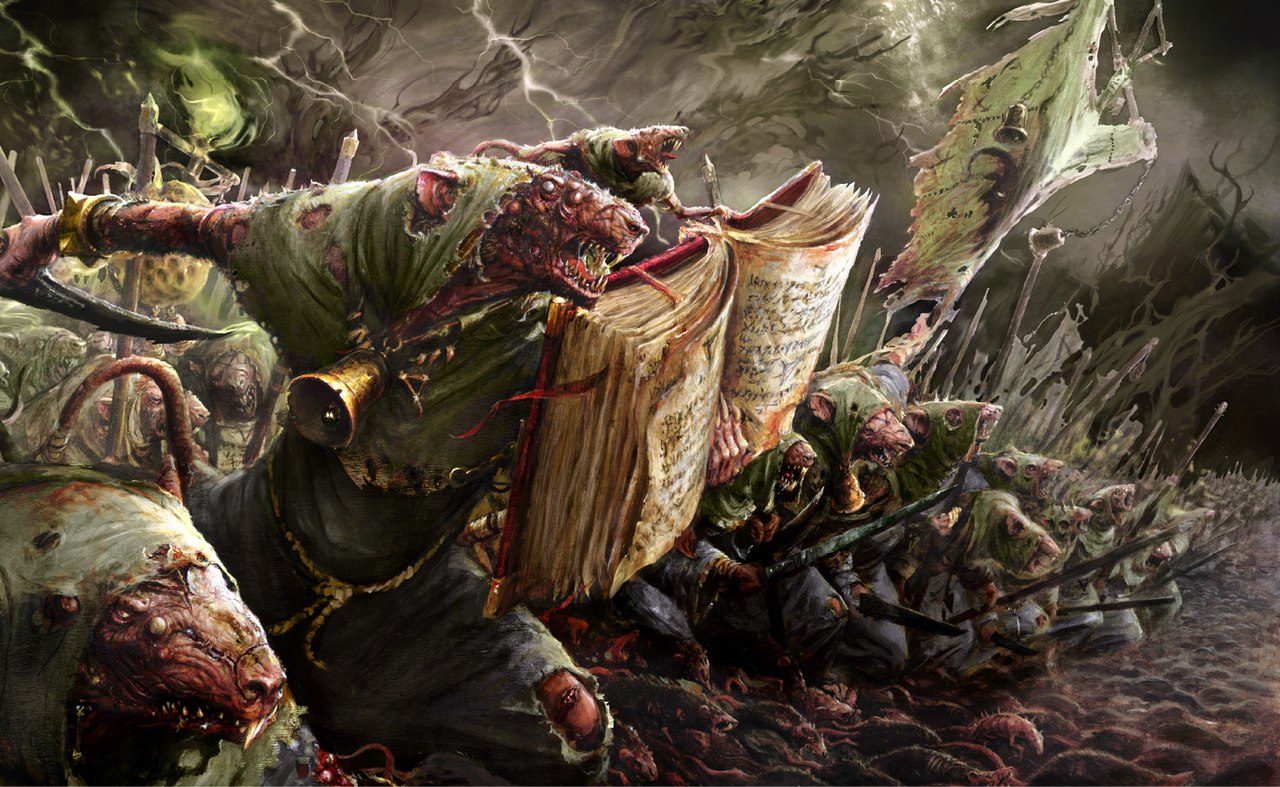
Noted in Gavin Norman's Dolmenwood House Rules document, the idea of Ratlings in the setting have long entertained me. Are they meant to be truly tiny things, or are they halflings but a bit scummier a la 40k? Given that Gavin has said he's not a deep Warhammer fan (or so I misremember from a convo on Orks), I must assume that Ratlings are meant to be actual rat-like people; something in tone akin to Redwall or Mouse Guard possibly. While noted in the document as being functionally equivalent to Halflings, with a 3-in-6 hiding rate in any environment; I'm going to attempt to do something a bit more setting appreciative with them. Also chucking in some Midderlands references.

Art from Larry MacDougall's Gwelf Project

Ratlings

Requirements: Minimum CON and DEX 9
Prime Requisite: CON and DEX
Hit Dice: 1d6
Maximum Level: 8
Allowed Armour: Any appropriate to size, including shields
Allowed Weapons: Appropriate to size (see below)
Languages: Alignment language, Common, Woodsigns

Ratlings (aka Giant Mouselings as they're called in Scrotland) are diminutive race of furred demi-humans who possess rodent-like features, long filthy tails, and teeth as strong as well-tempered iron. Seldom achieving heights greater than 3 feet or weighing more than 60 pounds when preposterously rotund or heavy with child, Ratlings rely on knowledge of secrets and their community to survive in an unforgiving world. Each Ratling warren is built in spiraling stone architecture deep beneath the roots of old trees, ruled over by broodmother and rat-king who tend to the collected knowledge and deeds of their ancestors. 

Ratlings, in their pure and honest forms, can be found in the Table Downs and Brackenwold; with corrupted forms commonly found in the Upper Middergloom of Havenland. Both types make use of sacred Woodsigns written in the whorls of trees and stones, which whisper secrets when read. Seldom does a Ratling adventure, as to surface-dwellers they are seen as pests or plague-spreaders regardless to any truth on that matter. When one does join up arms with humanity, they do so often with ambitions to start their own warren or as exiles of a warren which cast crimes against them. 

They're not the most well-loved creature to walk the world, but Brackenwolders have seen worse and Havenlanders have better things to fear. Grimalkin personally dislike the whole of the Ratling race based on a folkloric dispute wherein a Grimalkin was once made stumbledrunk on tipple and robbed of an estate by the Ratlings. 

Prime Requisites: A Ratling must have at least 13 in one or the other prime requisite in order to get a +5% to experience. The character must have a CON and DEX of 13 or higher to get a +10% bonus.

Abilities

Combat: Ratlings may use any type of armour, but it must be tailored to their small size. Similarly, they may use any weapon which is appropriately sized to their stature. They cannot use longbows or two-handed swords.

Defensive Bonus: Due to their small size, Ratlings possess a lower Armour Class (-2 bonus) when attacked by creatures larger than itself.

Hiding: Ratlings have an uncanny ability to disappear from sight:
●        In bushes or other outdoor cover, a Ratling can hide with 90% ability.
●        In dungeons, a halfling can also hide in shadows or behind other forms of cover, so long as he or she remains silent and motionless. The chance of success is 3-in-6.
●        If nude, a Ratling may pose as a rodent of unusual size rather than a sentient being, succeeding at a rate of 4-in-6 so long as those viewing the Ratling don't know they're on the lookout for the creature. 

Listenings: Ratlings have a 2-in-6 chance of hearing noises at doors, and in conversations or gathering gossips they have a 2-in-6 chance to determine if the information they're receiving is deceptive or intended as a secret.

Teeth of Iron: Ratlings may make unarmed attacks by biting, dealing 1d4 damage. Their teeth can pierce stone and metal with enough time. This damage increases to 1d6 at level 4, and 2d4 at level 6.

Secret Woodsigns: Ratlings may take a minute to read the whorls of a tree's trunk or the roughness of a stone to discern secrets. Once per day, a Ratling may use their woodsigns to do the following:
●        Determine the location of nearby edibles or water. The chance-of-success is 3-in-6.
●        Determine something said by a passerbyer in the last 24 hours. The chance of the information being relevant or useful is 10% per character level, to a maximum of 80%.
●        Conceal a message for others who can read woodsigns, up to 20 words. This message remains for a number of days equal to the Ratling's level.
●        Determine if another Ratling has made use of the woodsign, and if so what message they have concealed with it.

Stronghold (Warren): When a Ratling has sufficient funds, secrets, and time, they may construct a stronghold. These strongholds will be built deep beneath the roots of an ancient tree, constructed of stone along dirt tunnels when properly finished. Ratlings who have heard of the character's deeds and wisdom will make their way to the stronghold, and over time they will expect the Ratling to become either broodmother or Rat-King.

Dark Heather from Mouse Guard is a good base for a Warren

Level Progression/Saving Throws: As Halfling.

Randomized Appearance (Head, d8)
  1. Pudgy, slight-eared and tooth-bearing, like a gopher.
  2. Large-eyed and larger-eared like a vole.
  3. Long-snouted and squinty-eyed like a shrew.
  4. Tiny-eyed with large ears, like a house mouse.
  5. Large fleshy ears and bulbous black eyes, like a wood mouse.
  6. Slanted snout and small ears, like a common black rat.
  7. Jovial black eyes and chubby cheeks, like a doormouse.
  8. Large-headed with small black eyes, much like a musk rat.
Randomized Appearance (Colors, d10)
  1. Pink, nude and wrinkly, with flaking dandruff as if diseased.
  2. Pale white, with eyes that blaze red when concerned.
  3. Brown and black, like the bark of a tree towards the forest duff.
  4. Black and grey, like the smoke from an elder's pipe.
  5. Black as a cold winter night without stars.
  6. Red as fallen maple leaves, hints of orange.
  7. Pale grey, like a stone dove.
  8. Powder blue, like the Wood-King's jael stones.
  9. Wheat blond, like the autumn grains before the harvest.
  10. Stony grey, like an outcropping in the woods.
Randomized Coat (d6, don't roll if a nude)
  1. Straight-haired coat.
  2. Curly-haired coat.
  3. Wavy-haired coat.
  4. Velveteen coat of furs.
  5. Long silky coat of furs.
  6. Long straight-haired coat of furs.
Randomized Pattern (d8, reroll on Colors, if nude it's a mark on the flesh)
  1. Completely solid coloration, white upon the feet.
  2. Solid with different coloration upon the belly and hands.
  3. Blaze of a different color upon the face.
  4. Capped upon the head in a different color.
  5. Hooded in a different color upon the head and back.
  6. Masked in a different color over the eyes.
  7. Of roan pelt, with initial coloration fading into a different type as the seasons change.
  8. Varegated in different colors.
The Midderlands are very unkind to Ratlings.

Midderland Variety Mutations (d8)
  1. Covered in caustic green boils which rupture when struck with critical damage.
  2. Three eyes of murky jaundiced pickle green.
  3. Teeth like needles which pierce through the snout at odd angles.
  4. Slime-leeks from pores rather than sweat. 
  5. Vomits luminescent slugs when speaking too long.
  6. Forever twitching and speaking in double-double, hacking cough when trying not to.
  7. Fingers and toes of misshapen lengths, vaguely arthropod in digit appearance.
  8. Secondary rat-head growing out of back. Has nothing good to say.
Starting Outfit (d8) (Coinage/Wealth as a Halfling, its the whole of your warren's wealth.)
  1. Brata cloak of ochre red, clay-handled dagger, fine leather belt with beetle-buckle.
  2. Tunic of blue and white, carpenter's hammer (as mace), leather pouch with brass aglets.
  3. Long nightgown and sleeping cap, zig-zag dagger (your mother's), a smoking pipe (no snuff.)
  4. Cloth gambeson with fish patterns upon it, woodcutter's hatchet, tricorn hat.
  5. Pig-leather culottes bleached white, yellow-and-red beaded sash, walking cane (as staff.)
  6. Long Tartan with serpent torc, ancient brass shortsword (Goman make), bag of hash.
  7. Artisan's smock-frock, leather jackboots, and a tack-hammer (as mace.)
  8. Surtout of deep clay red, with a torc of ancient rat-king tails. A black hand ax.
Names (d20)
  1. Clundoder / Mosswater
  2. Basilmac / Gingi
  3. Methuselah / Prudencia
  4. Mac Luch Mor / Bea Luch Beag
  5. Kimkarnagie / Clarymulch
  6. Bromaine / Celdana
  7. Rocksorrel / Gabwhacker
  8. Quillhaver / Cloggswalk
  9. Craiken / Cavelhome
  10. Swiftlysung / Mumblerock
  11. Saynavain / Viluna
  12. Bigglebones / Bucklescutt
  13. Shoggwallow / Horsewalma
  14. Logalwealth / Buskerback
  15. Eulail / Biskpaw
  16. Clayulton / Doomhaver
  17. Reginald / Miramoore
  18. Broggleton / Constantia
  19. Wellbuckle / Limewater
  20. Reynard / Wilffenleaf
Why do you adventure with humans? 
  1. The Watchers made dark work to steal the bones of our ancient rat-kings. I must see them returned to my deeply-delved warren.
  2. The warren flooded, leaving few of us behind. I seek funds so I might rally kindred in distant warrens to help reclaim it from the water wyrds that've come.
  3. The Hag stole away my kin, humanity and grimalkin don't care for her muchly. They'll be honorbound to help me if I provide services in kind.
  4. The glint and glitter of gold warms my belly with mead and meat; to live under a tree is no life for a young blood like myself.
  5. I was chosen to join the Rat-King, but I feared the ritual. I can never go home, nor face my kind. I must find work among the tall-ones.
  6. In dreams I was haunted by the sword of  Saint, one of the Church of the One True God's sort. Upon his shoulders sat a head like mine own, and from his mouth he spoke of my destiny. I must seek such a thing.
  7. Kin mined too deep, found blue stones that laugh, found green stones that cackled. I made it out alive, but they're not my kin under that hill no more.
  8. Wolves routed us, devoured us, and faerie folk watched and laughed. Good neighbors my arse. Met enough men-folk who in words don't care for neither crowd. Figure we can kill a bunch of them together, have a day of it.


Next: I was putting together some random encounter lists, but Ratlings caught my interest. 

Saturday, July 21, 2018

Chromatic Soup 02 Addendum: Lowmen

I really liked coming up with the Lowmen in Chromatic Soup 2, they're weird denizens of the autumnal westerlands. The region is rife with hobos, puritan halflings, and all manner of weirdness, and the Lowmen are demons/devils/et cetera that fell out of Hell and back to Earth somehow. They're not Evil proper, but they are bad. They curse, they corrupt, and when too many of them get together they start to feel a lot like they're Evil proper again. They're based a lot on Sheriff Cooley from O Brother, Where Art Thou?, in that they're sort of Lawful made manifest; and Lawful often leads to Evil if not tempered with compassion.

They've got spells, but feel free to retool them. They're a weird class of weird mechanics meant to imply a means of playstyle in addition to their mechanics.

The Lowman
Requirements: CHA 9.
Prime Requisite: CHA
Hit Dice: 1d8
Saves & XP: As Elf.
Maximum Level: 8

Pierre Rougemont
(Used without Permission)

Lowmen are denizens from the more hellish realms of reality who have found their way out of some hellmouth or infernal passage to these western endless hills. They hear the whispers of the road gods and find themselves unshackled to Evil and Chaos, and instead faced with the terrible but tear-inducingly beautiful gift of free will. 

They feel no overwhelming existential desire to do Evil, but are still motivated by a desire to adhere to a hierarchy of deals and deal-making, using their diminished powers to bind others to them.  They cannot take souls to the lower planes anymore, instead any soul taken turns into a ghost at death of the one who signed it over. 

Lowmen appear like a parody of a human, almost a political cartoon come to life. They tend to dress nicely in twill suits, and those who freshly arrive often wear smoked lenses to hide their tears at the beauty of freedom and the horror of the fires that still shine in their eyes. 

While not working towards Evil, they are still considered “bad” for the most part, with the bulk of humanity viewing them as beings with low morality.  They are often selfish and utterly mortal in their sins and desires, and that ambition can lead them to do wicked and terrible things. 

Class Features
Weapon Proficiency: Lowmen are proficient with one of the following types of weapons: elegant weapons, brutal weapons, or cruel weapons. These categories are open to interpretation and may occasionally overlap. A cane sword is certainly elegant, but using it while sheathed to beat a man to death would certainly be brutal or cruel. Using a big nasty cleaver knife might be brutal, but using it to kill the man who made it would be cruel, and using it to kill someone in a kitchen might be considered elegant. Lowmen take a -2 to Hit penalty when fighting outside their proficiency. 

Armor Proficiency: Lowmen can wear any cloth, leather or mail; provided it was stolen from someone who needed it, of business attire, or was created by depraved individuals. Lowmen wearing armor outside of these qualifications do not gain any benefit from wearing such armors.

Weasel Among Rats: Lowmen possess an innate talent in reading the sinful nature of mortals. Lowmen can see murderers, thieves, ne’er-do-wells, and villains as though they were illuminated by a greasy candle fire. When a Lowman actively sizes up a person they are able to discern whether or not the individual has recently committed a cardinal sin (an act that caused another to suffer for their benefit) or if they are merely just fallible mortal types. Lowmen are immune to being ambushed by villainous individuals, but may still be ambushed by men who believe they are backed by the Heavens or those who are attempting to do the right thing in the wrong way.

Keep the Devil Down: Lowmen fell up to Earth somehow, they don’t rightly know and thinking on that is a cause of stress and unneeded fear. As a result, Lowmen are removed from the natural order of things in the mortal world. Dogs bark at them, cats hiss, insects land on their faces, and flowers wilt at their touch. In time they can disguise this, but it requires them to roll with Disadvantage while actively trying to blend into the mortal world. If they do not disguise their worse nature, they can be turned and held by those of divine power as any Demon or Devil.

Regardless, Lowmen cannot enter a church or holy place without taking 1d4+Level in damage. Holy spells that heal or benefit a Lowman benefit the Lowman as normal but make them feel exceptionally disturbed and unclean within, as though the Heavens have made a mistake and might come to correct it…

Dark Bargainer: Lowmen must make a Charisma Save to fight against their own worst nature and do a kindness for others without expecting something in return. Lowmen can act out of self-interest and may aid an individual they are grooming for a bargain, but they cannot openly or easily aid another without expecting compensation of some sort. Trading in coins, drinks, favors, or compliments is any easy to work around such an issue. Those who die in debt to a Lowman become ghosts, unable to be resurrected or put to rest without the debt being paid in some form. 

Spell casting: Lowmen possess eldritch powers befitting their origin. Lowmen have a number of spells per day, as indicated below, and as soon as they run out of spell slots their eyes appear sunken, their skin appears greasy, and they smell strongly of smoke.  These spells are instinctive, and they require no preparation or memorization. A Lowman who is out of spell slots cannot Keep the Devil Down.

Lowman Spell List
A Lowman’s spells are selected from the list belows as desired by the referee, such as when a new spell is gained or upon the dawn of a new day. The spells of a Lowman are drawn largely from illusionist, diabolist, and magic-user spell lists; aesthetically just a bit less pleasant looking than they might otherwise be. There are also a few unique spells, which are described below.

First Level
Big Hollow Voice - Lowman can speak loudly, making a number of individuals equal to his Charisma Modifier think something the Lowman says was their own idea for 1d4 rounds, Save vs Magic for half. The following day the target must make a Morale save or take Disadvantage on all rolls out of shame for having been lead astray. Cannot affect supernatural entities unless they have less HD than the caster.

Invitation to the Blues - Lowman stares into the eyes of the victim, causing them to second guess their natural skills and talents for 1d6 rounds. Victims roll with Disadvantage when using their highest attribute or when attacking with a weapon they are proficient in.

Heaven’s Tin Horn - Upon casting, a single victim of the Lowman will feel as though they are emboldened in their efforts, gaining a +2 to their next action. After they have performed this action, all following actions are rolled with Disadvantage and a failure is considered a Critical Failure or Botch. Once a Critical Failure has been suffered, the effects end.

Jinx of a Tree Bore Crooked - The Lowman allows any newly cooked food, recently harvested water, or newly assembled equipment within his view to spoil, fail, or break upon use. When cast, someone taking a bite out of a freshly cooked steak will find themselves biting into a tumor; someone drinking freshly boiled water will find dead larvae in it, or someone who just put together a wheel will watch it crumple and break when put on the wagon. 

Contracted Promises - The Lowman can conjure a magical contract out of thin air, offering a specifically worded deal of cooperation or services rendered to any being willing to sign. If the signee breaks the terms of the contract, their ghost belongs to the Lowman upon their death. If the Lowman breaks the terms of the contract, they lose their ability to cast this spell until they either kill the signee at a crossroads, get the signee to eat the contract, or put two copper coins on the signee’s sleeping eyes.

Shadowman - The Lowman can allow their shadow to walk away from their body, existing wherever shadows may in a two-dimensional form. The shadow may be used to trip, grab, or move objects as a Mage Hand spell, but requires the Lowman to make a Strength Check to be successful in such regards.

Second Level
Logic of the Human Heart - Lowman can demoralize someone by making them realize the foolish and eventual failure of their dreams or love. Save vs Magic to resist, on failure subject is depressed for 1d4 weeks and must make a Morale save to follow their dreams. Once passed, the curse is lifted.

Kinstrife - Lowman can turn siblings and friends against one another by foul manipulation, bringing to the surface a deep buried disagreement or grudge intent on causing pain. Target must Save vs Magic or voice the grievance loudly, subject of grievance must make a Morale save or act with irresponsible emotion.

Lullaby to Nightmares - Lowman curses a number of victims equal to their Charisma modifier to suffer a terrible nightmare when next they sleep. The Lowman controls only things influenced by sound, so snapping their fingers while casting the spell will cause something related to dreams of broken bones or rapping upon a door. A spoken phrase might echo and repeat, unceasingly. The Lowman gains a +2 bonus to actions made against any individual who suffered from the nightmares.

Wage of Sin - The Lowman curses any currency on a victim to take on a number of pounds in weight equal to any bounty or charge they’ve committed in worth. Thus a man with a 500 silver bounty on his head and two coins to his name, will feel his backpack rip as 1000 pounds is exerted out of the coins. If the victim has not suffered any bounty or charge, the weight is equivalent to the last amount of damage they’ve dealt. The coins do not deal more damage than 1d4+Level of the caster, but they may be very very hard to pick up or retrieve by the sinner. These effects last 1d4 hours.

Down to the Bone - The Lowman curses an ally’s weapon to be elegant, brutal or cruel, the type of which being dependant on how the ally uses their weapon or what it looks like. If the cursed weapon deals critical damage, the Lowman may add their own weapon’s damage dice to the total. If the damage totals are equal, the victim suffers the full shattering of any bone in the area struck.

Debtor’s Conjuration - The Lowman can call forth the ghost of any being who failed to uphold their end of a contract or bargain. The ghost is free-willed, but cannot attack the Lowman or be seen by anyone the Lowman does not wish the ghost to be seen by. The ghost exists for 1d4 days, can be turned as an undead, and will attempt to perform a small task to free themselves from their debt. Such ghosts fade into a netherworld upon the ending of this spell, or ascend to someplace nicer or fouler should they complete their debted task.

Third Level
Bad as Me - The Lowman curses a target of Evil alignment or recent action view themselves as a demon for 1d6 days. Anytime the victim looks into a mirror or reflective surface they see more and more of their mortal flesh rot away, revealing a monster beneath. Sins and bad actions committed by the Lowman during this period become painfully scrawled across the illusory flesh of the victim (1d8 damage per day at most). The victim must also make Morale saves each day or suffer permanent damage to their psyche (-1 to Wisdom). Victims who hide in religious places or attempt to seal themselves away from others are immune to permanent damage after the first day. 

Sins of the Father - The Lowman curses a target to be haunted by an ancestor who greatly disapproves of the victim’s lifestyle, choice of clothing/weapon/friends, and all manner of petty things. The victim is harried by this ghost for 1d3 days, suffering a need to make Morale checks each morning or go through the rest of the day exhausted. Changing behavior to the desires of the ancestor can prevent such penalties, but will alienate friends and allies.

Gavel of the Mausoleum - The Lowman can demand parlay and conference with the dead, who while under this spell, will operate at the bare minimum with the intelligence of a young man even if they might otherwise by mindless undead. The Lowman must offer boon and tribute to the dead and keep up their end of the deal, lest the undead act with renewed strength; becoming immune to turning for 1d4 weeks. 

Rain Dog Curse - The Lowman curses the victim to forget the location of their home, camp, or recent domicile while simultaneously removing their ability to read directions, compass signs, or the stars to orient themselves. This curse lasts for 1d3 nights. Friends who attempt to lead  victim to their home do not appear as friends to the victim, their faces blur to that of the Lowman and their words speak the opposite of truth in the mind of the victim. 

Big Empty Sky - The Lowman can clear the sky of clouds and stars, showing nothing but a big grey empty careless void. Religious or romantic type victims viewing this must make a Morale check or feel disheartened, with religious spell-casters losing a spell for the day upon a failure. Heat cast down from the sky under this spell is extra dehydrating and painful upon those who toil, and any rain or clouds that might form after the spell is cast seem oppressive and cruel.

Siren’s Snaking - The Lowman whistles a tune which crawls into the mind of a victim, lingering for 1d3 days. The tune will bother the victim each day when they desperately need peace, it will be sung near enough to the victim from the lips of three hallucinatory sirens. The victim must Save vs Spells each day, on the first day suffering a Charm spell, on the second day suffering a Fear spell, and on the third day falling into a collapsed heap of weeping as the tune grows louder and louder until the ears of the victim bleed (2d6 damage, deafens target for 1d4 days.) Plugging up ears with blessed wax can alleviate the hearing of the tune.

Fourth Level
The Right Bullets - The Lowman can change silver coins into cursed ammunition for weapons. These ammunition deal +2 damage and +2 to hit, but on a failed roll the ammunition will instead strike an ally, true love, or somehow find a way during that day to harm someone innocent and see the blame fully placed upon the user. These cursed enchanted items turn back into coins after their use, with any face upon the coin marred horrifically. 

Born of Smoke - The Lowman can instantly become smoke, obeying the same rules as a gaseous form spell, but the duration lasts for as long as the Lowman desires until either the sun or moon rises. While in this form, the Lowman can teleport into any flame they see, becoming the smoke of that fire.

Worry, Pain & Struggle - The Lowman curses a victim, maintaining direct eye contact for three rounds. On the first round the victim must Save vs Magic or find themselves drenched in a cold sweat, their mind broken by a primordial fear that steals away their voice and causes them to drop any held weapon. On the second round, the victim must roll Morale, on a failure they collapse and begin beating themselves with bare fists while simultaneously doffing armor worn. On the third round, the victim must make a Constitution save or they begin to wretch and their vision fades into a bleary place where everything appears to be made of fire. 

Hell Break - The Lowman strikes their foot, a cane, or some other implement on the ground, scratching a line. Emerging from the ground one round later, is an army of imps and lesser demons of hellfire who charge forth in a 40’ ray, stabbing and harrying anyone in their way, dealing 4d8 damage to anyone in their path. Upon going 40’ from the source they turn into bats, rats, slugs and bugs which scatter off into the wild. Anyone who attempts to fight these creatures as they charge will be attacked by their verminous form, who will deal 1d4 additional damage to each victim before melting into slime.

Crossroads Conjuration - The Lowman can make sure that around the next bend, over the next hill, or around the next corner, is a crossroads. This crossroad will be the nearest possible crossroad, folding away space and time to allow for ease of travel. Those who are aligned to the Lowman can follow him through to this crossroad as though passing seamlessly through a portal.

Call the Killer - The Lowman places a heinous curse upon an enemy, but they must first proclaim a loud and hateful monologue about the hell that is to befall their victim. Once this has been finished, a masked being of smoke and fire wielding a weapon of the same type as the Lowman, will burst through a nearby wall or emerge from nearby brush and attempt to murder the victim. This creature is statistically identical to an Invisible Stalker; save that it lacks invisibility.

Reaching 8th Level: Upon reaching 8h level, a Lowman is an open cancer upon existence, attracting 3d20 Level 1 Lowmen who appear at the next crossroads the Lowman passes by. These lesser lowmen followers are newly risen to the world and are searching for organization, a proper venture, and someone to order them around. They will expect the Lowman to find them employment of some kind, forming an Enterprise that will require a base of operations to be established. After 30 days of service, most will leave to pursue their own opportunities, but 2d6 will remain loyal retainers to their master; provided the Enterprise remains lucrative and interesting to them.


Randomizers.
Appearance - Body (d10)
  1. Stocky Impish Body, Dwarfish in Size.
  2. Uncomfortably Long-Limbed Body.
  3. Sickeningly Perfect Musculature.
  4. Stubby Legs and a Bulging Paunch.
  5. Densely Muscled but Elderly Frame.
  6. Ape-like Posture, Huge Powerful Arms.
  7. Asymmetrical, like Rough Hewn Stone.
  8. Serpentine Torso, Disproportionate Arms.
  9. Corpulently Obese with Bony Little Limbs.
  10. Horrifically Skinny, with Water-Logged Limbs.

Appearance - Horrid Feature (d12)
  1. Facial features Best Compared to a Predatory Bird.
  2. Smile of Too-White Teeth that Shimmer in the Moonlight.
  3. Deeply Sunken Eyes with Tiny Flickering Lights for Eyes.
  4. Long Split Tongue of a Serpent.
  5. Hair Naturally Sweeps Back as though Draped Over Invisible Horns.
  6. Flies Crawl in and out of Pores and Orifices without reaction.
  7. Smoke Leaks from Corners of the Mouth.
  8. Fingertips are Geometrically Symmetrical and best compared to Arrow Heads.
  9. Has the Long Scabrous and Bifurcated Tail of a Devil.
  10. Coughs up Slugs, Rats, and Moths.
  11. Smile of Wolf Fangs, Crocodile Teeth, and Golden Replacements.
  12. Hands and Feet appear Constructed of Hellish Rock under the Skin.

Appearance - Dress (d12)
  1. Fine Twill Suit of Cream & Red.
  2. Fine Herringbone Suit of Navy & Grey.
  3. Fine Twill Suit of Grey & Black.
  4. Glossy Satin Suit of White.
  5. Heavy Brocade Suit of a Lawman.
  6. Heavy Felt Suit of Blue.
  7. Stolen Wedding Attire (Slightly Torn)
  8. Stolen Religious Garb (Ill-Fitting)
  9. Stolen Overalls and Work Shirt (Goose Eggs in Pocket)
  10. Bloodied Woodworker’s Plaid Shirt.
  11. Dusty & Rotting Funerary Clothing.
  12. Raggedy Mayoral Outfit with Sash.

An Attempted Framework Conversion for: The Hole in the Oak set in Dolmenwood

The Hole in the Oak is a low level adventure about venturing into the Mythic Underworld for Old-School Essentials , and though it features s...